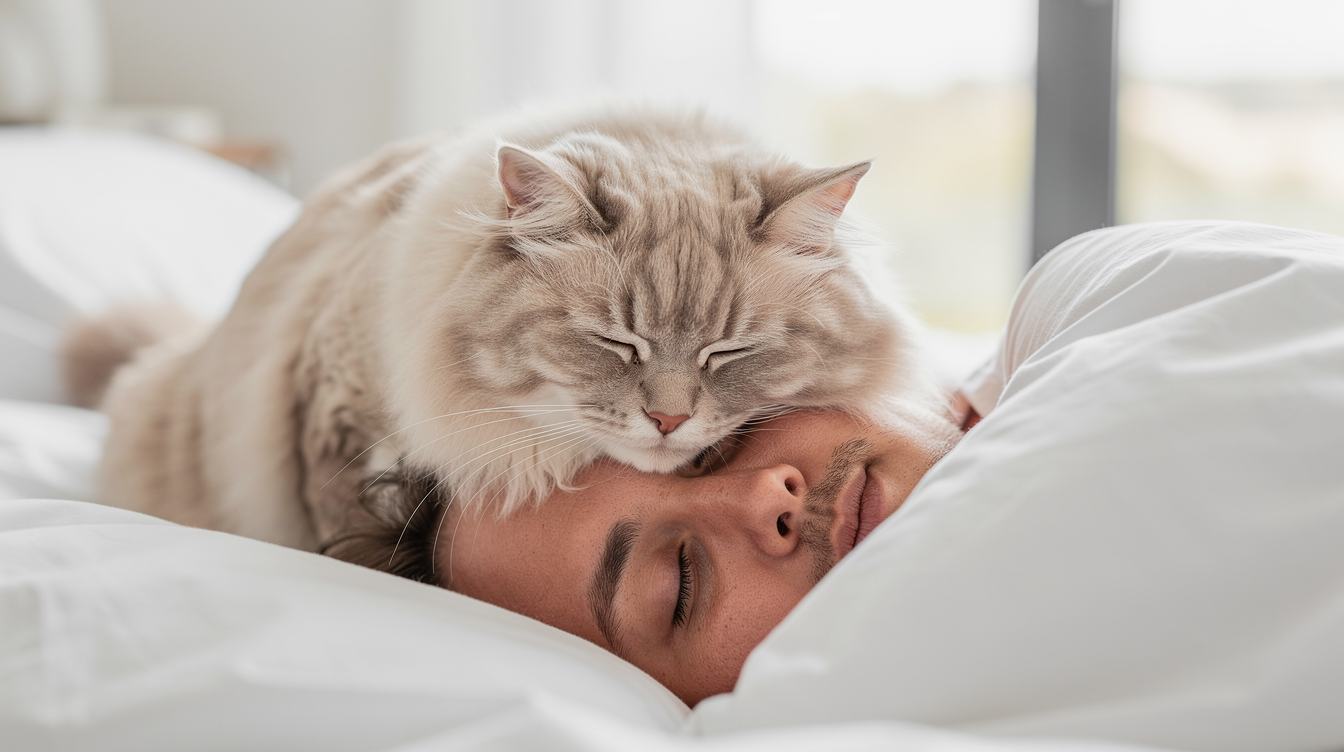
You’ve probably wondered why your cat insists on sleeping on your head, and the reasons are more complex than you might think. For one, your head provides a warm and cozy spot that’s irresistible to your feline friend. But there’s more to it than just physical comfort – your cat’s behavior is also driven by instinct and a deep-seated need for security. As you try to drift off to sleep with your cat snuggled up on your head, you can’t help but wonder what’s really behind this adorable but sometimes annoying habit.
Also See:
Table of Contents
Key Takeaways
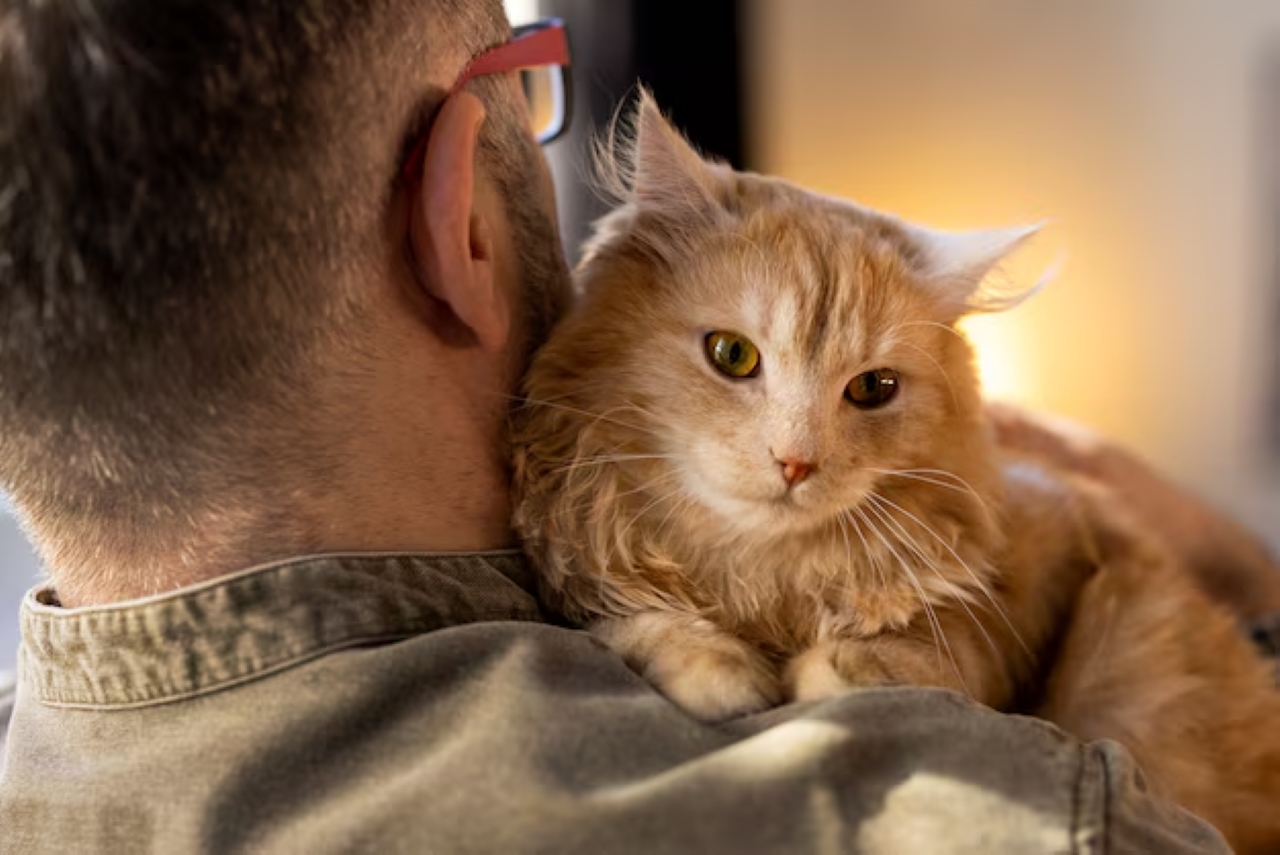
- Cats sleep on heads for warmth and comfort, as the head is one of the warmest parts of the body.
- Sleeping on the head provides a sense of security and safety, indicating trust and attachment to their owner.
- The elevated position of the head allows cats to survey their surroundings, reflecting their instinctual preference for height.
- Familiar scents and pheromones on the head offer emotional comfort and reassurance, impacting the cat’s psychological well-being.
- Cats sleep on heads to seek physical closeness and bonding, often accompanied by affectionate behaviors like purring and kneading.
Cats Seek Warmth and Comfort
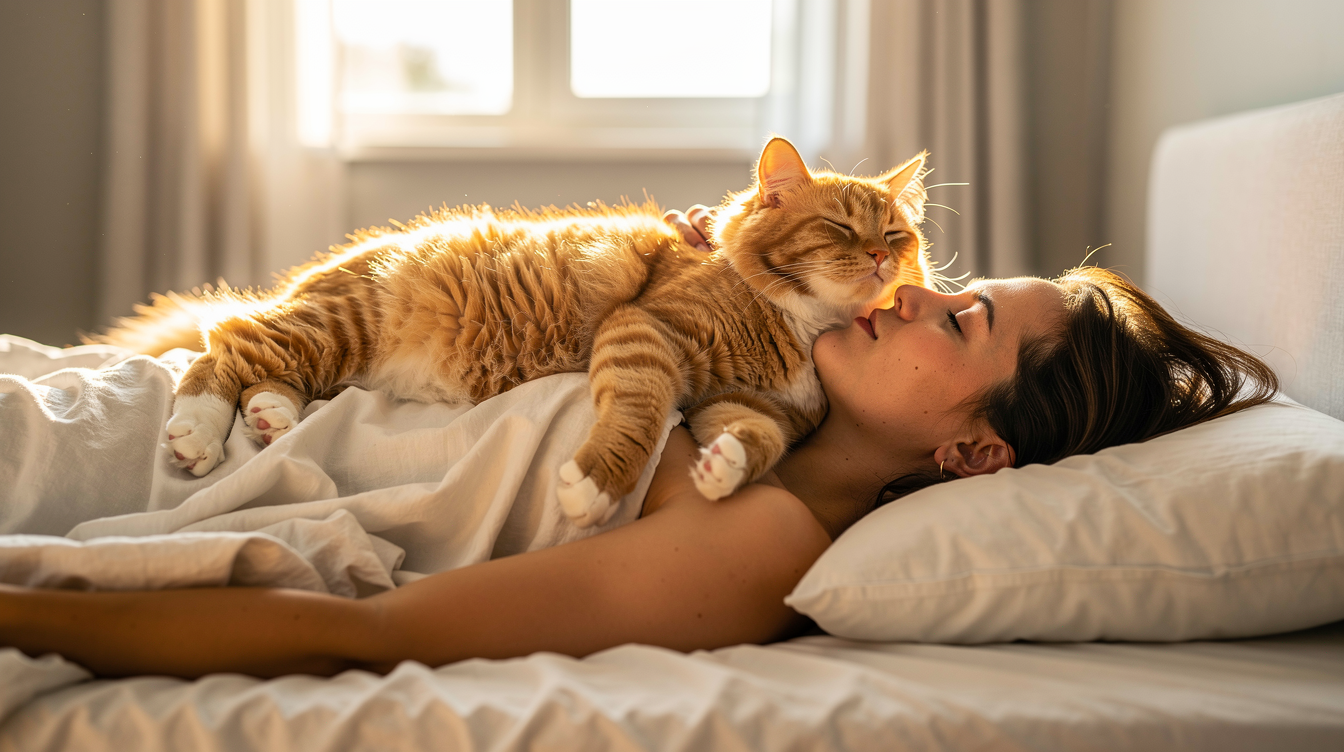
At night, your cat is likely drawn to your head because it’s one of the warmest parts of your body. This behavior is rooted in their natural instinct to seek warmth and comfort.
You see, cats are ectothermic, meaning they regulate their body temperature using external sources, such as the sun or a warm lap.
Your head, with its rich blood supply, becomes an attractive resting spot for your feline friend. By snuggling up against your head, your cat is able to tap into this warmth, which helps to conserve energy and maintain their bodily functions.
This preference for warmth is also reflected in their sleeping habits, as cats often choose cozy, sheltered spots to snooze.
This post contains affiliate links. However all the information provided on this site are my own honest opinions. See more in Disclaimer.
Your cat’s fondness for your head is also influenced by social bonding, as they associate your warmth with comfort and security.
Your Head Is a Safe Haven
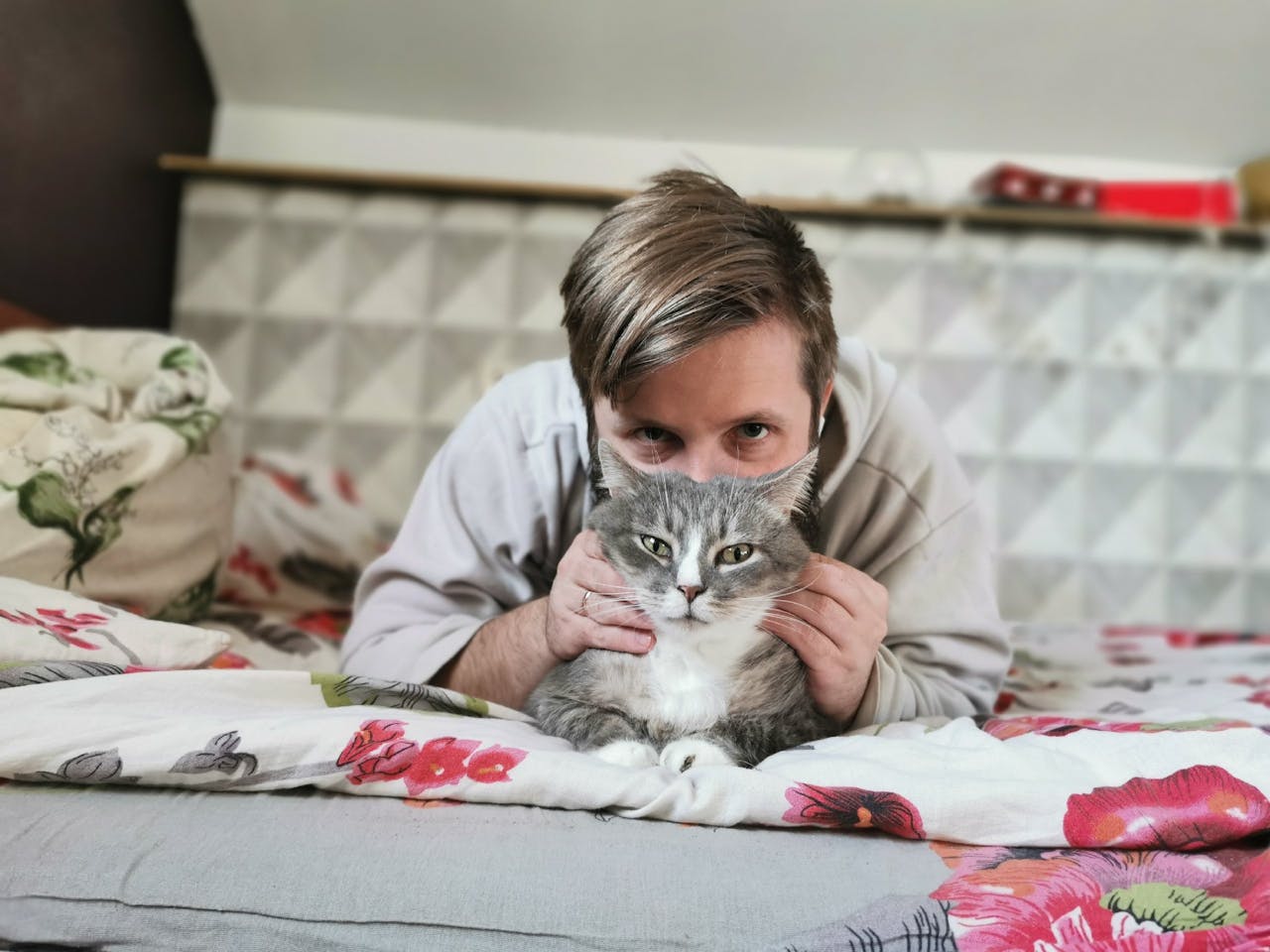
Your head provides the purr-fect combination of warmth and comfort for your cat, which is why it’s often their go-to sleeping spot.
As your cat curls up on your head, they’re not only seeking physical comfort but also a sense of security, which is deeply ingrained in their natural behavior.
This behavior is similar to how cats seek constant companionship by following their owners around the house, as it indicates trust and attachment.
Warmth and Comfort Found
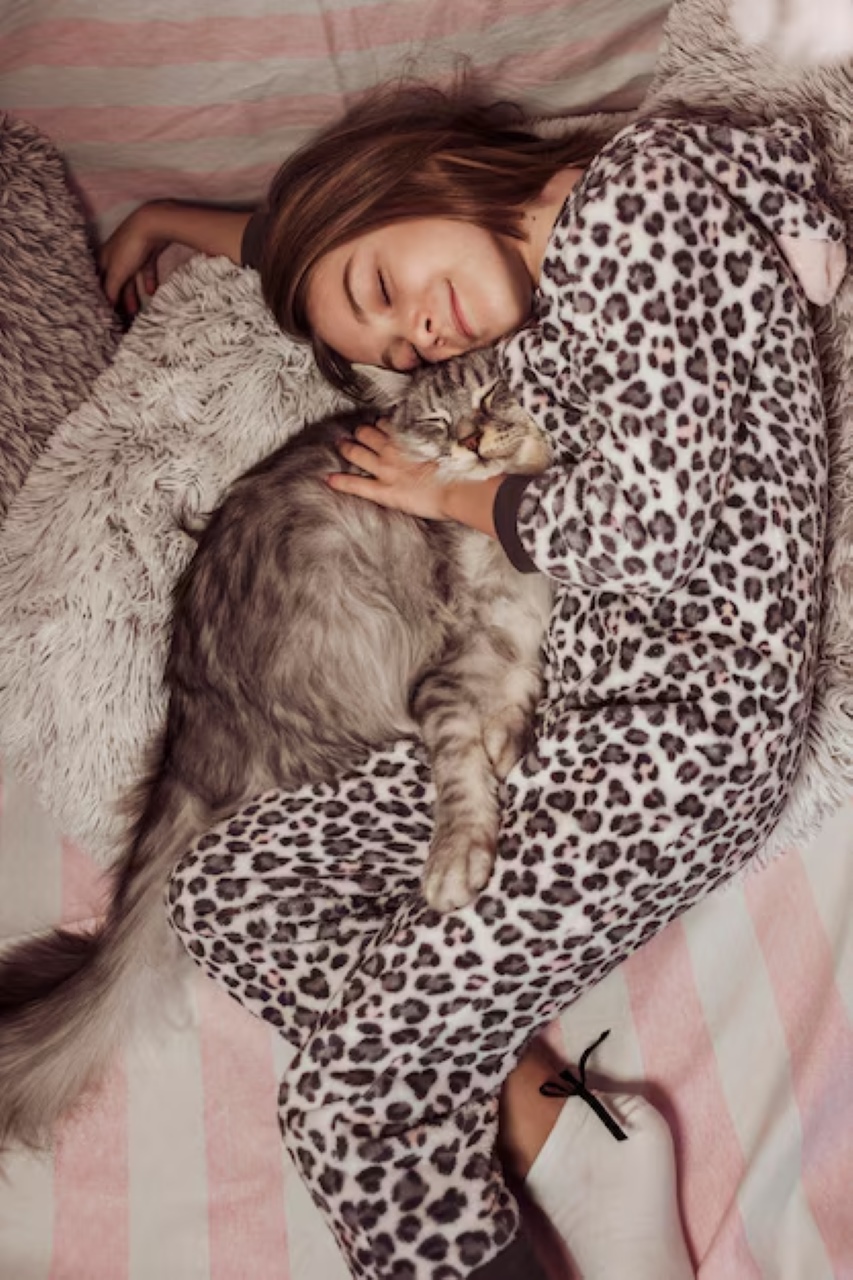
Nestled against a warm and stable surface, your cat’s preference for sleeping on your head may be attributed to its innate desire for comfort and security.
Your body heat is an attractive source of warmth for your cat, especially in colder environments.
Also See:
As a natural instinct, your cat seeks out warmth to conserve energy and regulate its body temperature. Your head, in particular, is a concentrated source of heat, making it an ideal spot for your cat to snuggle up.
Observing your cat’s sleeping habits, you’ll notice that they often prefer to sleep in areas with a consistent and comfortable temperature.
This is a fundamental aspect of feline behavior, as they’ve a unique ability to sense and seek out warmth.
By choosing to sleep on your head, your cat is exercising an inherited trait that provides them with a sense of comfort and tranquility.
Additionally, your presence and scent may also contribute to your cat’s perception of your head as a warm and welcoming space, reinforcing their desire to sleep there.
This behavior is a reflection of your cat’s ability to adapt and find comfort in their environment.
Sense of Security Provided
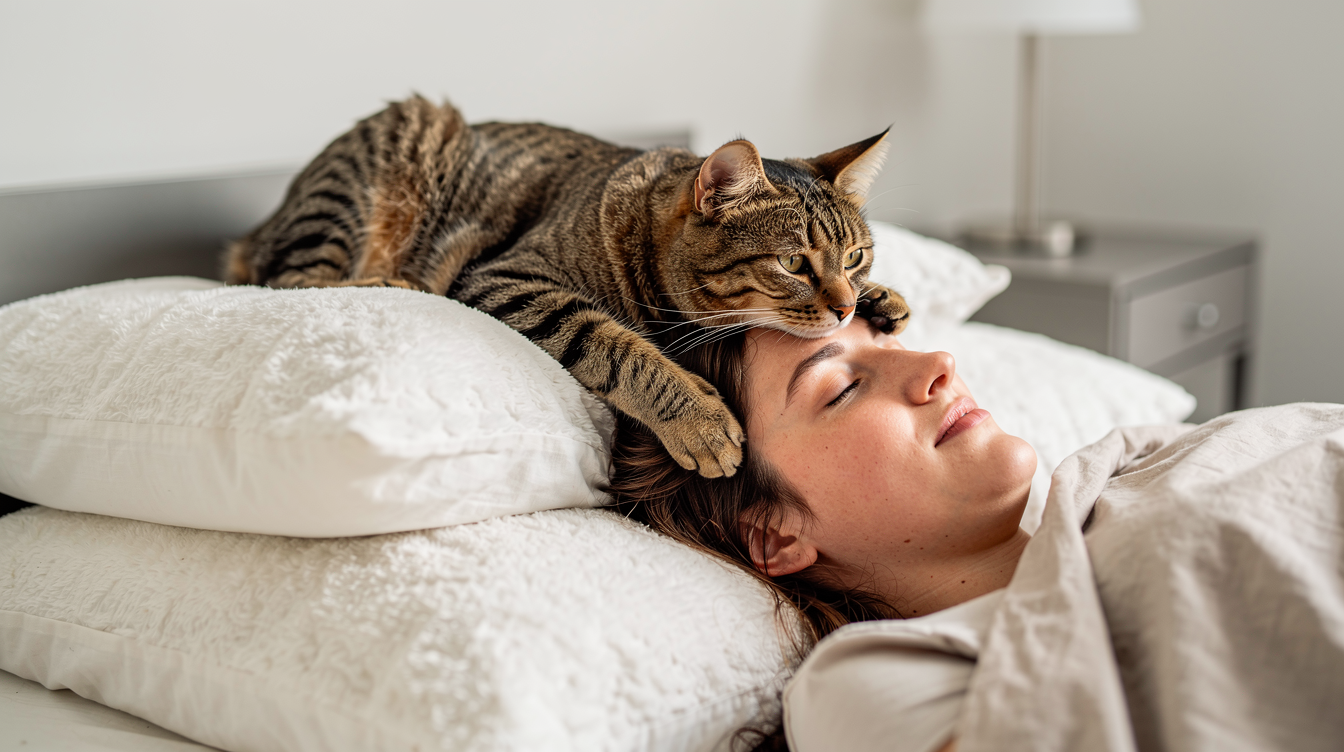
Some researchers believe that your cat’s preference for sleeping on your head may be linked to a deep-seated need for security and protection.
When your cat curls up on your head, they may be exhibiting a natural feline instinct to seek out a safe haven.
In the wild, cats often sleep in elevated, sheltered spots to protect themselves from predators and harsh weather conditions. Your head may provide a similar sense of security, allowing your cat to feel safe and relaxed.
As you observe your cat’s behavior, you may notice that they tend to seek out your head when they’re feeling anxious or stressed. This could be due to the fact that your head is often associated with feelings of comfort and safety.
Your cat may be drawn to the warmth and scent of your hair, which could provide a sense of familiarity and reassurance.
By sleeping on your head, your cat may be attempting to tap into this sense of security, allowing them to relax and recharge.
This behavior is a reflection of the strong bond between you and your cat, and highlights the importance of understanding and catering to their natural feline instincts.
Cats Are Drawn to Scents
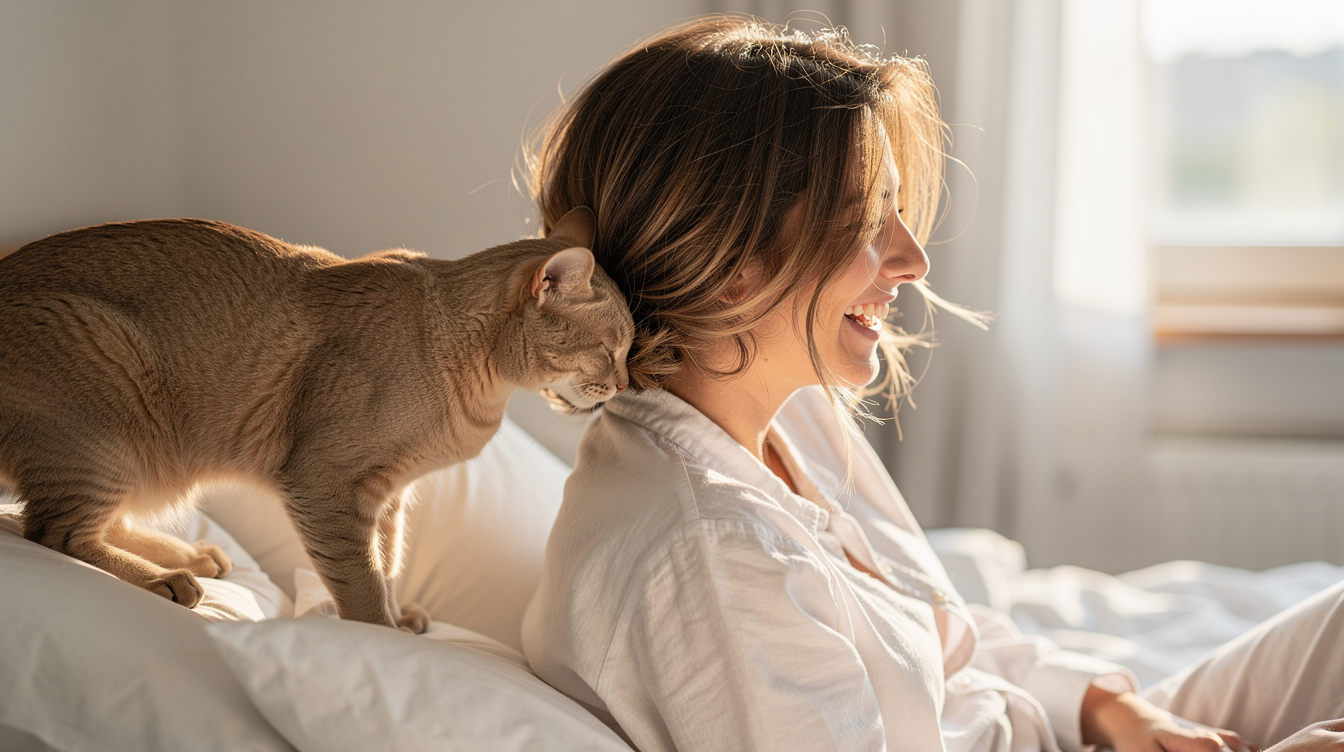
As you try to understand why your cat prefers to snooze on your head, you should consider the role of scents in feline behavior.
Cats use pheromones, chemical signals that convey information, to mark their territory and establish a sense of familiarity and comfort.
Your scent, in particular, can provide your cat with a sense of security and comfort, which may explain why they’re drawn to your head as a sleeping spot.
Pheromones and Scent Marking
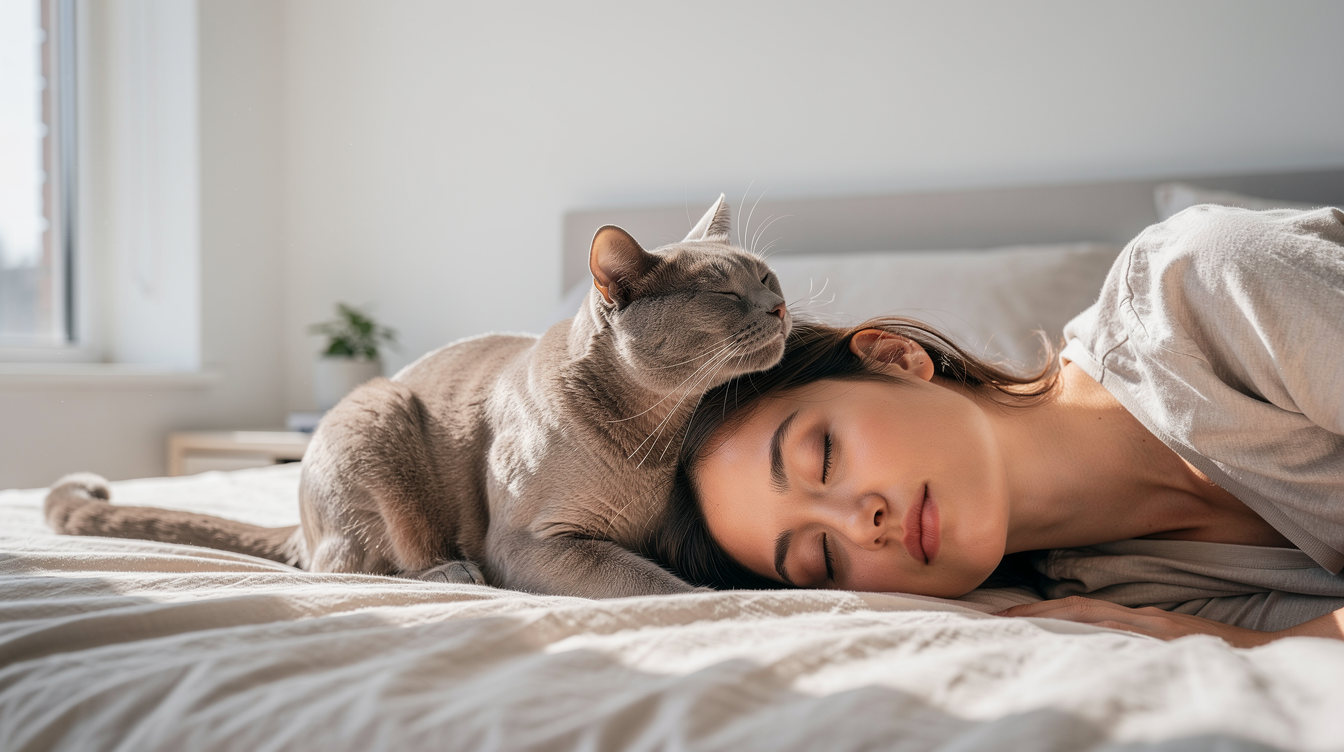
Numerous studies suggest that cats are highly sensitive to pheromones and scent marking, which play a significant role in their behavior and social interactions.
As you observe your cat’s behavior, you’ll notice that they use scent communication to convey information about their identity, sex, reproductive status, and dominance.
Pheromone signaling allows them to mark their territory, warning other cats to stay away. This territorial marking is vital for maintaining social hierarchy and reducing conflicts.
Your cat’s sense of smell is also essential for olfactory recognition, allowing them to distinguish between familiar and unfamiliar scents.
Comfort scents, such as those from their mother or littermates, can provide reassurance and reduce anxiety.
Social bonding is also facilitated by scent marking, as cats recognize and respond to the pheromones of their feline companions.
Additionally, scent marking helps with species identification, enabling cats to distinguish between their own kind and other animals.
Trending in Cats:
Familiar Scent Comforts Cats
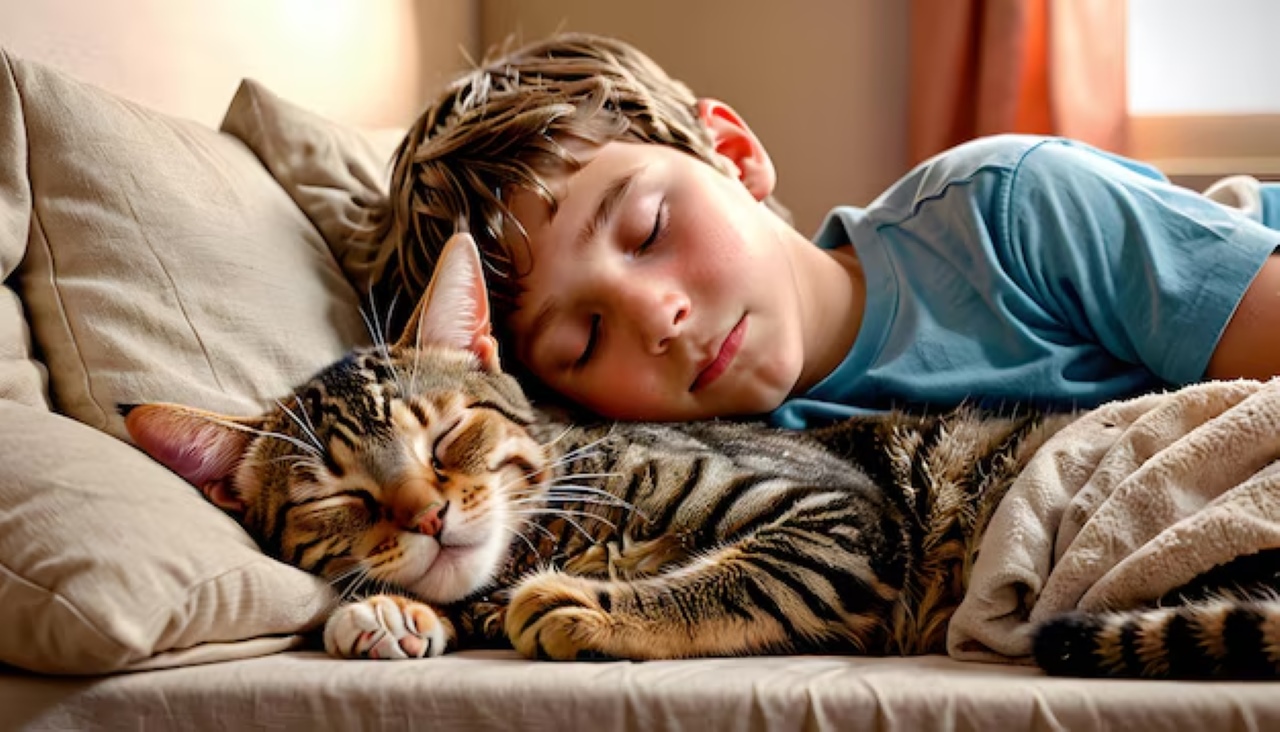
Cats exhibit a strong affinity for familiar scents, which play an essential role in their emotional and psychological well-being.
Your cat’s sense of smell is closely linked to their memory and emotional centers, making scent recognition a crucial aspect of their feline behavior.
| Familiar Scents | Effect on Cats |
|---|---|
| Your scent | Provides comfort and reassurance |
| Household scents | Creates a sense of familiarity and security |
| Food scents | Stimulates appetite and interest |
| Litter box scents | Helps establish a sense of territory and hygiene |
| Outdoor scents | May trigger curiosity and exploration |
As you can see, familiar scents have a profound impact on your cat’s behavior and emotional state. By recognizing and responding to these scents, your cat is able to navigate their environment with confidence and ease.
Your scent, in particular, is a source of comfort and reassurance for your cat, which is why they often seek out your presence and may even sleep on your head.
By understanding the importance of scent recognition in feline behavior, you can better appreciate the significance of your cat’s affinity for familiar scents.
They Want to Be Close
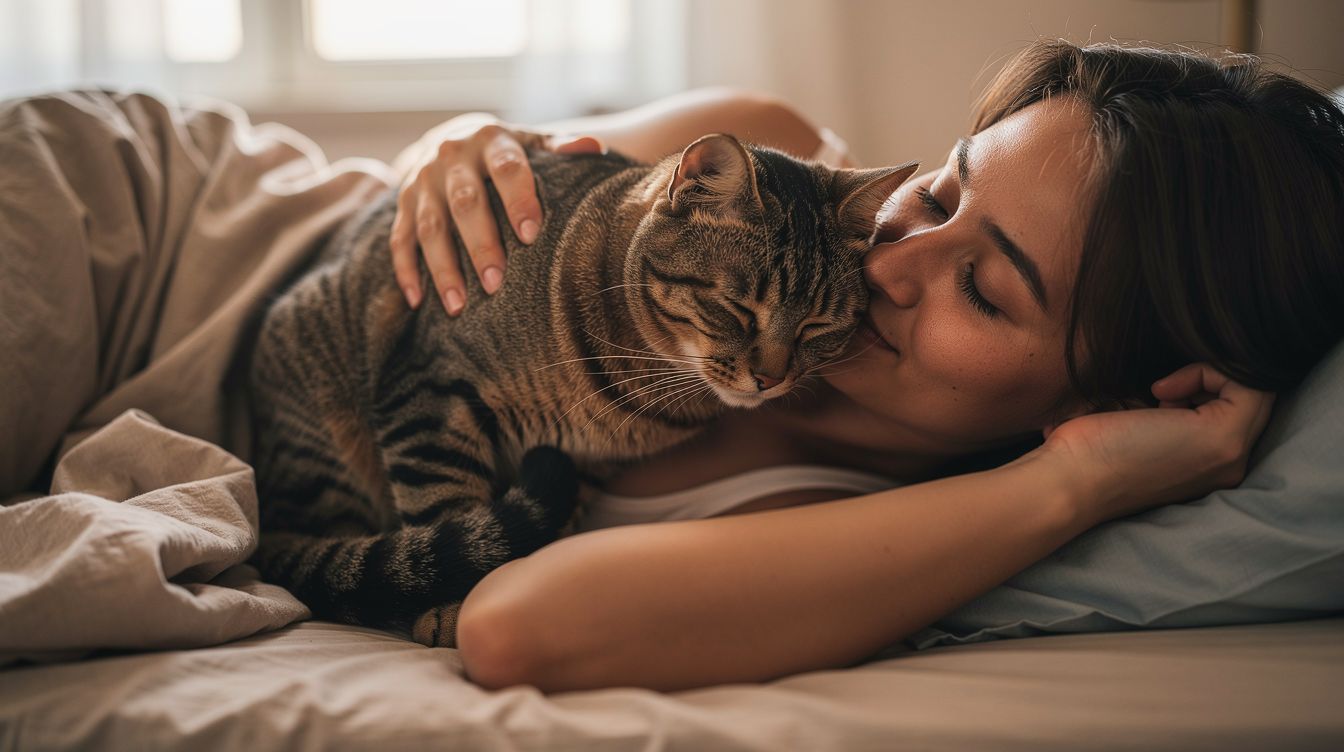
One primary reason your cat sleeps on your head is that they’re seeking physical closeness.
This behavior is rooted in their natural feline instincts, where they often sleep in close proximity to their mother or littermates for warmth and protection.
As your cat grows and develops a bond with you, they may exhibit similar bonding behavior by seeking out physical contact.
This behavior can be particularly noticeable if your cat is experiencing signs of depression, as they may seek extra comfort and reassurance from you.
This closeness serves several purposes:
- Regulation of body temperature: Cats often seek out warmth, and your head provides a convenient source of heat.
- Sense of security: Your presence provides reassurance, making your cat feel safe and protected.
- Strengthening of social bonds: Physical contact is an essential aspect of feline social behavior, and sleeping on your head allows your cat to reinforce their bond with you.
Your Head Is a High Spot
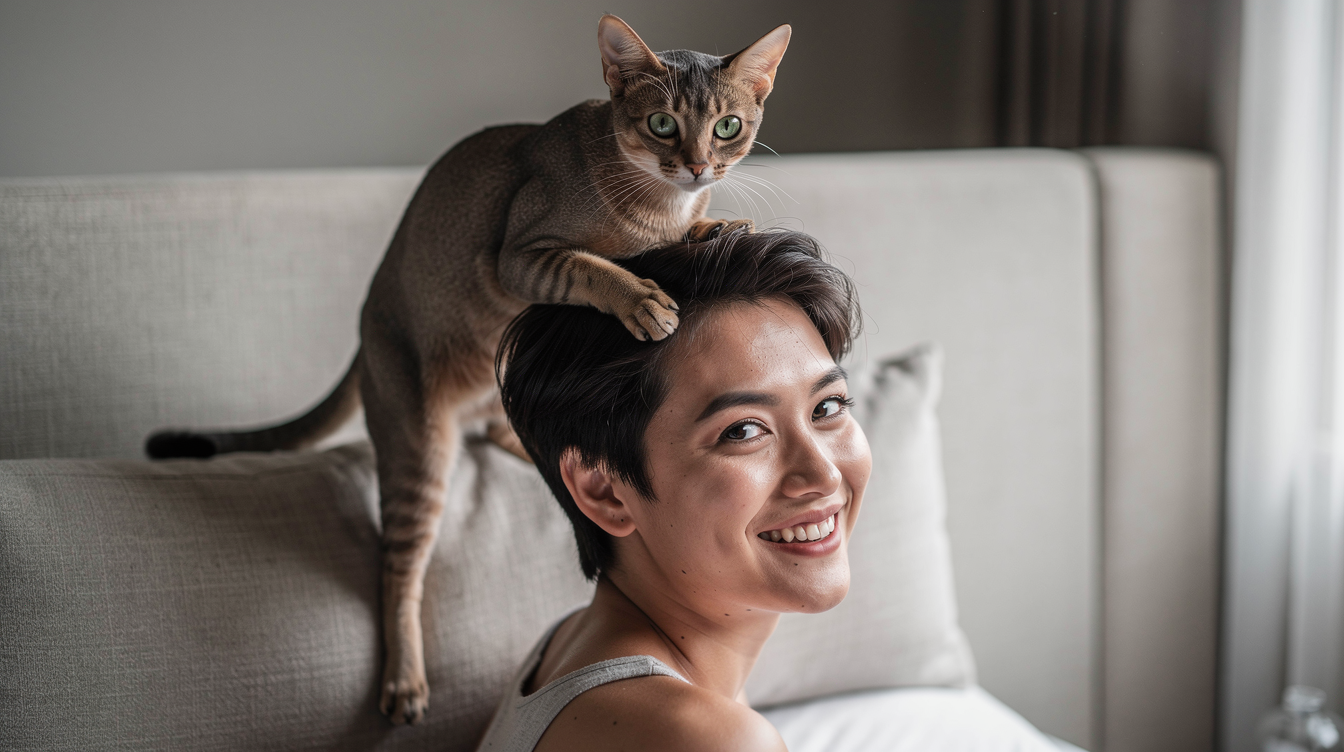
Your head’s elevated position may also be a factor in your cat’s preference for sleeping on it.
From this lofty perch, your cat can survey its surroundings with ease, exhibiting an instinctual behavior inherited from its wild ancestors.
In the wild, cats often climb trees or rocks to gain an elevated vantage point, allowing them to observe potential prey or detect potential threats from a distance.
Cats Need a Sense of Security
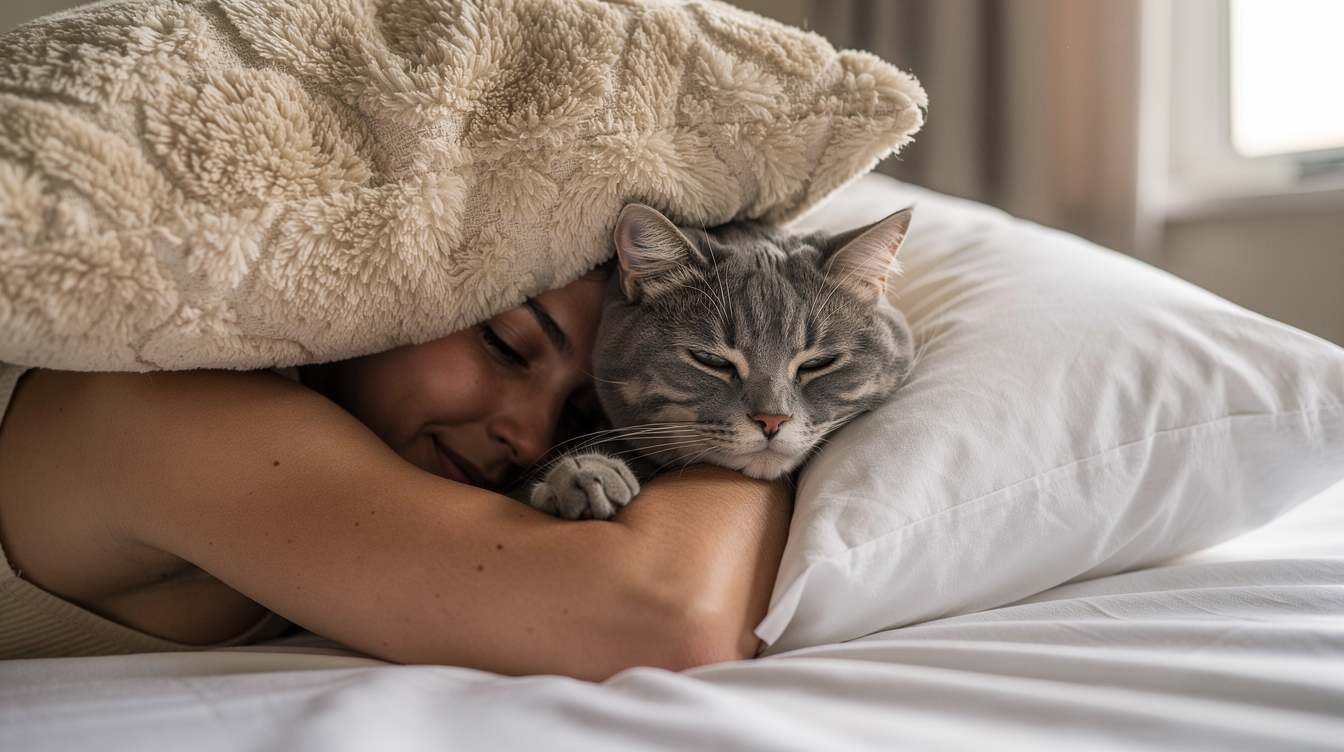
On top of the need for elevation, a sense of security may also be driving your cat to sleep on your head. Observations of cat behavior have shown that cats often seek out secure and protected areas to rest, and your head can provide just that.
Your cat may associate your head with feelings of safety and comfort, particularly if it’s a spot where they’ve received attention and affection in the past.
Providing a comfortable living space with cozy resting areas can help satisfy this need for security, but some cats may still prefer your head as their ultimate safe spot.
Some possible explanations for this behavior include:
- Evolutionary instincts: In the wild, cats often sleep in elevated, hidden spots to avoid predators and stay safe. Your head may provide a similar sense of security.
- Territorial marking: Cats have scent glands on their faces and heads, and by sleeping on your head, your cat may be leaving its scent behind to mark its territory.
- Proximity to a trusted companion: Your cat may feel secure sleeping on your head because it’s close to you, a trusted and comforting presence.
It’s a Sign of Affection
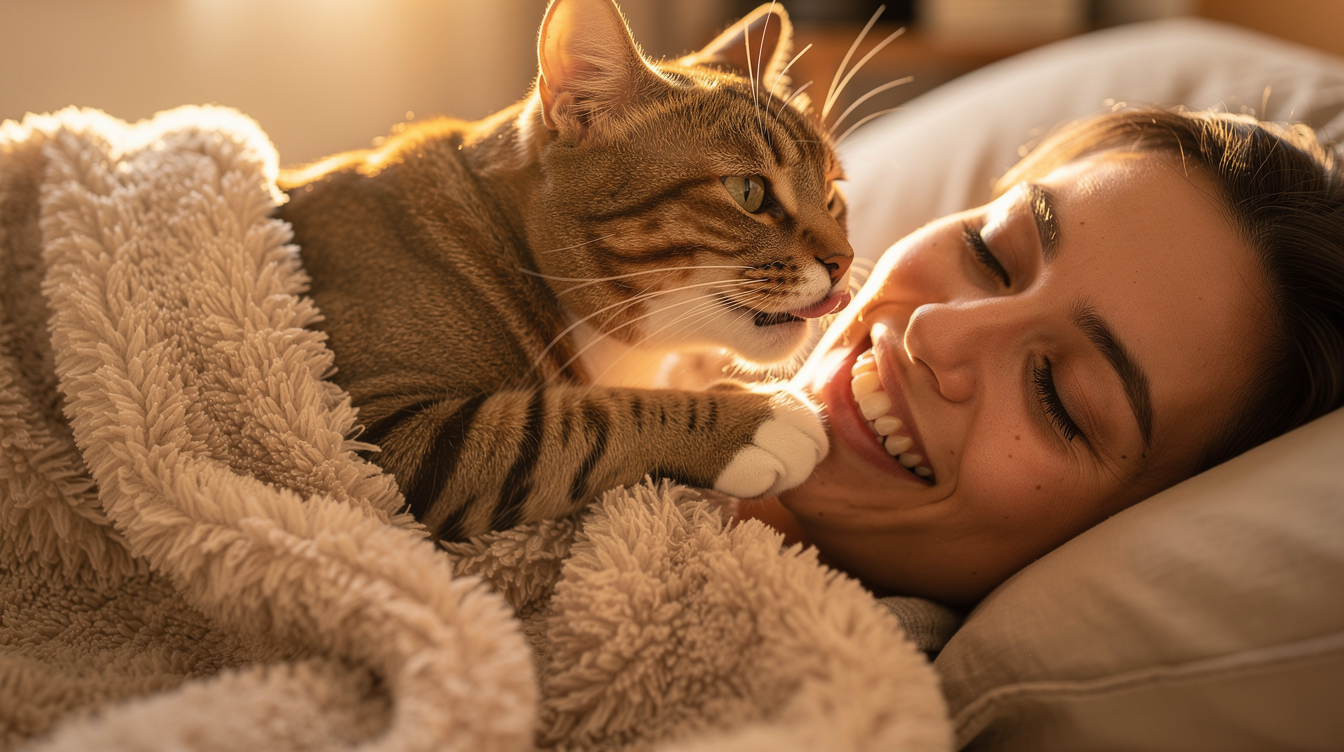
Sleeping on your head can be more than just a matter of security for your cat – it may also be a display of affection. You’ll notice that your cat chooses to sleep on your head, rather than on other parts of your body.
This preference suggests that your cat associates your head with comfort and intimacy.
In cat communication, physical contact is a significant aspect of feline behavior, particularly when it comes to showing affection.
Understanding cat body language can help you decipher your cat’s intentions and needs more effectively, leading to a stronger bond between you and your feline companion.
When your cat sleeps on your head, it’s likely seeking a sense of closeness and connection with you. This behavior is often accompanied by other signs of affection, such as purring, kneading, or rubbing against you.
By analyzing your cat’s behavior, you can infer that sleeping on your head is a way for your cat to bond with you and strengthen your relationship.
So, the next time your cat curls up on your head, recognize that it’s not just seeking a cozy spot, but also expressing its affection for you.
This subtle yet meaningful behavior is a demonstration of the complexities of cat communication and the unique bond you share with your feline companion.
Frequent Questions and Answers
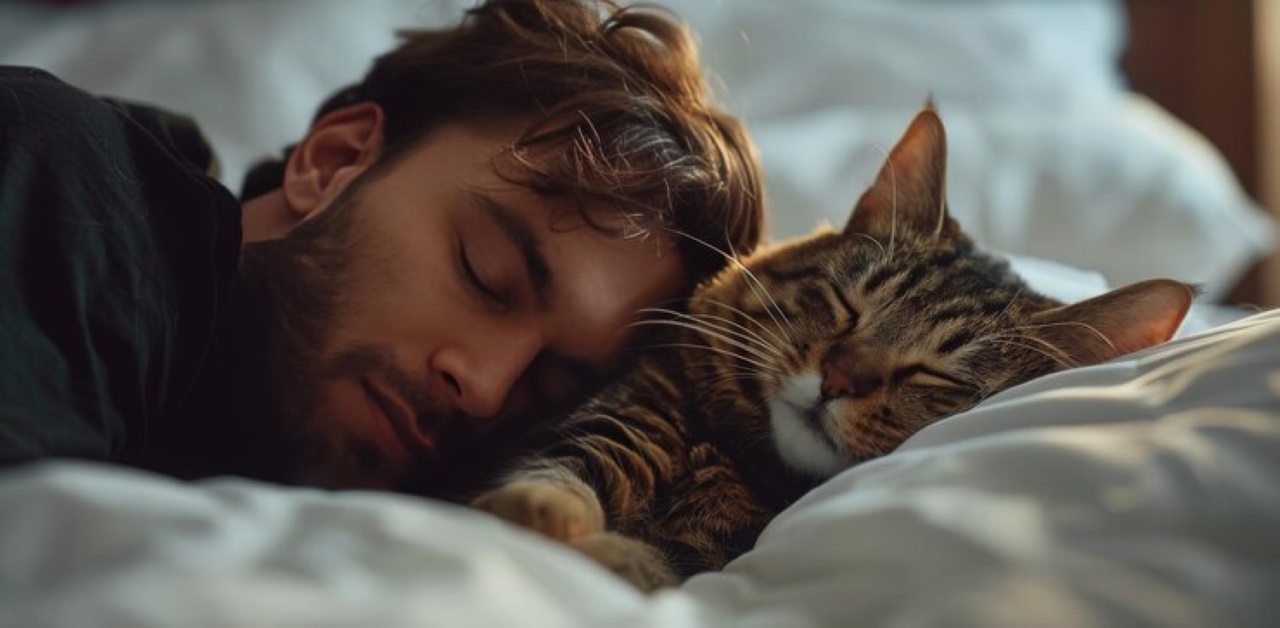
You lie in bed, your long hair a tangled mess, and your cat snuggles in, purring contentedly on your head. Cats can indeed sleep on your head, even with long hair, prioritizing feline comfort over obstacles in their cat behavior.
You’ll likely find that your cat still prefers your head over a big pillow, as their behavior is driven by instinct and affection, not just comfort; they crave warmth and scent, which your head provides.
You’re wondering if it’s unhealthy for your cat to sleep on your head at night. Observations suggest that cats prioritize feline comfort in their sleeping habits, but sleeping on your head may lead to overheating and respiratory issues.
You’re wondering if your cat’s snoozing on your head can lead to hair loss or dandruff. Observations suggest that cat behavior, such as frequent nuzzling and rubbing, can transfer oils, potentially impacting your hair care routine.
Like a crown, your hat may symbolize a barrier to your cat’s affection, but it’s unlikely to deter them; cats are drawn to head warmth, a comforting cue that drives their behavior, so they may simply nuzzle around it.